A seller in Burr Ridge accepts an offer at $2.1 million. Two weeks later, the appraisal comes back at $1.85 million. The buyer's lender pulled three comps: a house on a landlocked half-acre, a townhome in a different subdivision entirely, and a property forty minutes south that happens to share a square footage figure. None of them back up to a pond. None of them sit behind a gate. The number on the appraisal report is defensible on paper and wrong on the ground, because in Burr Ridge the square footage was never the point.
This is not a hypothetical risk. It is the direct, mechanical consequence of two facts about this village that most portal pages never connect: the sales volume is thin enough that a handful of closings can swing the market's own reference number, and the value sits in the land as much as the house. Put those two facts together and you get a market where the "median price" printed on any given site is less a measurement than a snapshot of whichever six or fourteen transactions happened to close that month.
Four Portals, One Village, Four Different Medians
Pull up Burr Ridge on four different sites in the same season and you will get four different answers to the same question. Zillow's home value index for the village stood at $828,471 as of March 31, 2026. Redfin's March 2026 snapshot put the median sale price at $737,500 across all home types. Realtor.com reported a $1.30 million median home sale or list price for February 2026, with homes moving in 30 median days and selling at 96% of asking on average. Movoto's June 2026 figures showed a median list price of $1.07 million.
Those four numbers span nearly $600,000, inside a four-month window, describing the same 60527 zip code.
| Source | Window | Reported Figure |
|---|---|---|
| Zillow (home value index) | As of March 31, 2026 | $828,471 |
| Redfin (median sale price, all home types) | March 2026 | $737,500 |
| Realtor.com (median sale/list price) | February 2026 | $1.30 million |
| Movoto (median list price) | June 2026 | $1.07 million |
In a market with hundreds of monthly closings, these gaps would signal methodology differences and not much else. In Burr Ridge, they signal something more specific: there simply are not enough transactions for any single algorithm to land on a stable number.
Why Six Sales Can't Set a Market
Redfin's own new-listings data from the same period tells the real story. In one recent month, the village had 14 new listings at a $1.1 million median asking price, sitting a median of 48 days on market, drawing roughly one offer apiece. Only 6 homes sold that March, compared with 12 the year before.
Six sales is not a market. It is a sample size small enough that a single high-end estate closing or a single condo closing can swing the median meaningfully in either direction, purely as an artifact of which two or three properties happened to change hands that month. Realtor.com's methodology, weighted toward list price and shorter windows, will land somewhere different from Redfin's trailing sale-price average in the same month, and both are technically accurate. Neither is describing a market so much as describing whoever sold.
For a seller, this means the number your agent uses to set a list price cannot come from a portal average. It has to come from a hand-picked set of true comparables, and in a village this thin, that comp set might only have two or three real candidates. For a buyer, it means walking in with a Zestimate as your anchor is a mistake in either direction: it might be $300,000 low, or it might be $300,000 high, and you will not know which until you understand what you are actually buying.
The Land Is the Product
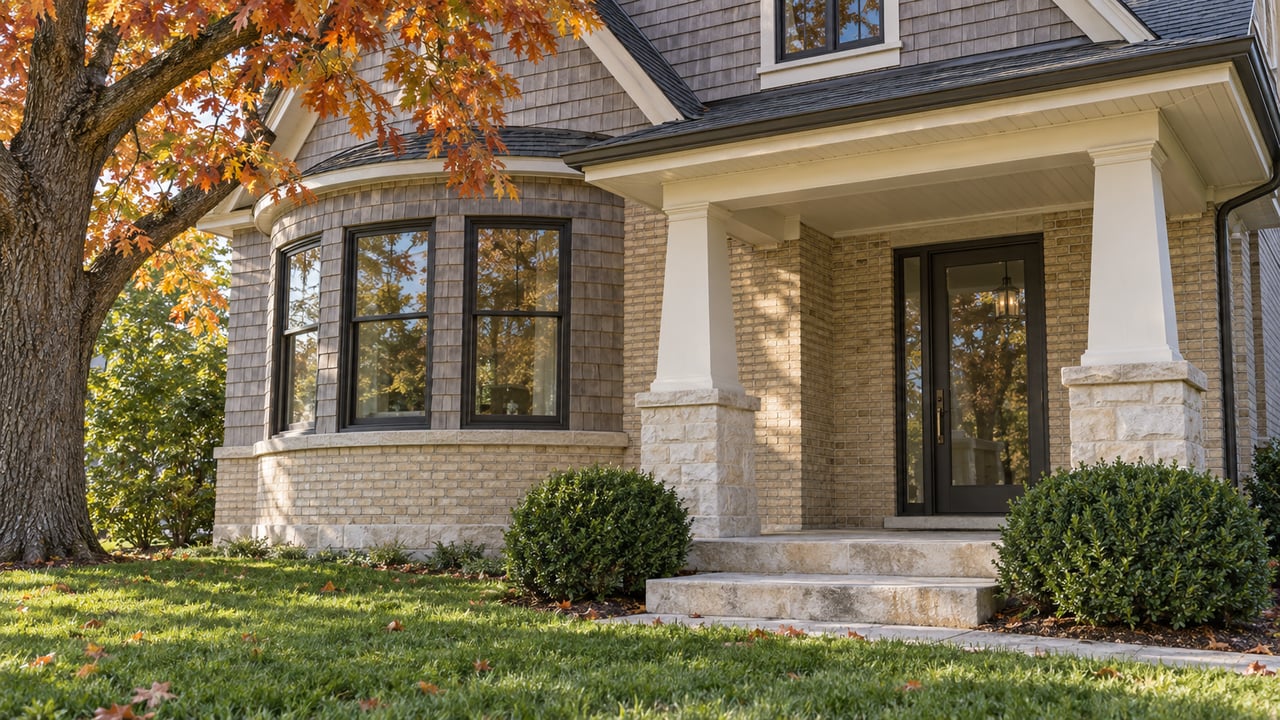
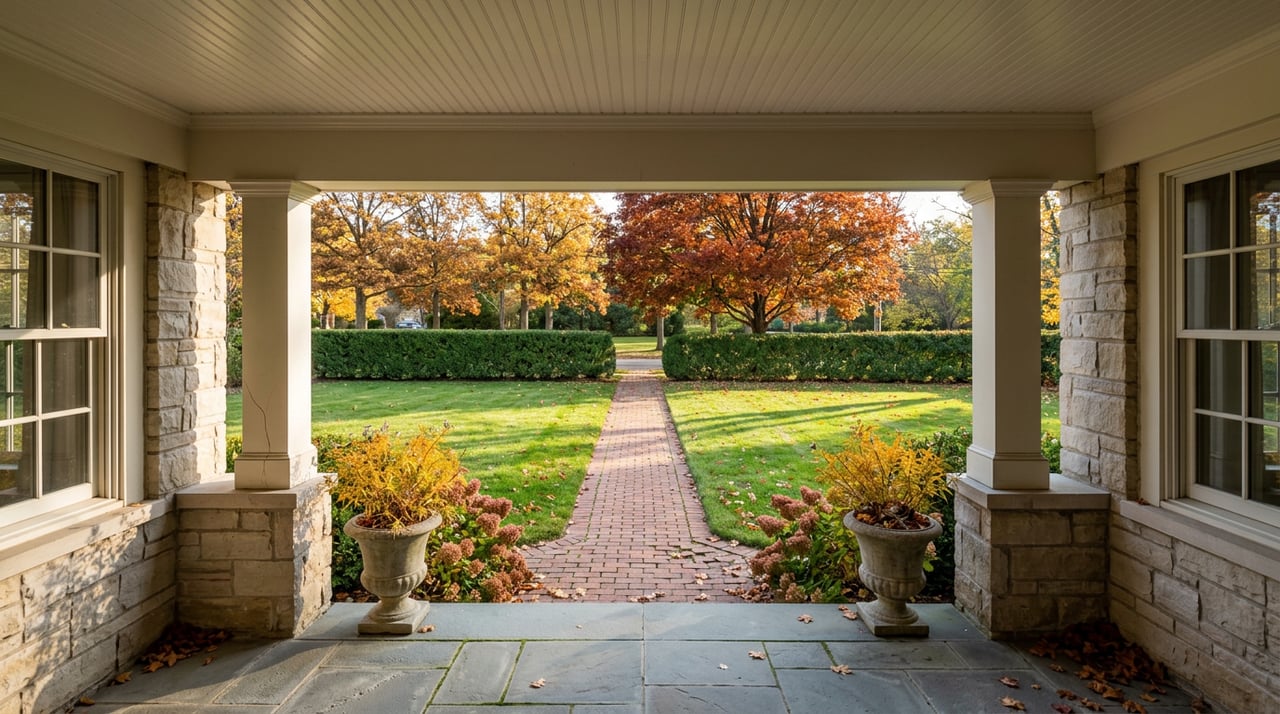
What you are buying in Burr Ridge is rarely just the house. The village's luxury inventory spans lots from roughly 0.63 acres in established gated communities up to a 7.59-acre parcel on South County Line Road, and most luxury properties fall somewhere between half an acre and 1.3 acres, with true estate parcels stretching well beyond that. That range is the whole ballgame.
Consider a concrete example from the resale market: a 1998-built home at 302 Ambriance Drive, sitting on 0.63 acres with 6,072 square feet, carried an estimated sale range of $2.0 million to $2.43 million. Two houses with that same square footage figure, one behind the gates at Ambriance with water views and one on a flat, treeless lot near a commercial corridor, are not comparable properties just because a spreadsheet says they are. The village's named gated communities, Ambriance, Falling Water, Carriageway Club, Heather Fields, and the Waterford subdivision, each carry their own baseline for privacy, water frontage, and lot depth that a generic price-per-square-foot number cannot capture.
This is precisely the setup that produces the appraisal gap described above. An out-of-area appraiser working from an automated comp pull will often average toward square footage and ignore the fact that a wooded, pond-facing 0.63-acre lot behind a manned gate at Burr Ridge Club, with its 24-hour guarded security and private clubhouse, is not the same product as a 0.63-acre lot on an open street two miles away. Buyers and sellers who understand this ahead of time can push back on a low appraisal with real comp data. Those who don't discover it during the loan contingency period, when there is far less room to negotiate.
The County Line Nobody Puts on the Flyer
There is a second variable that rarely makes it into a listing description: Burr Ridge straddles both Cook and DuPage counties. The majority of the village, including most of its estate sections and the Village Center, sits in DuPage County, but the zip code 60527 is used regardless of which side of the line a given parcel falls on. That means two homes across the street from each other can be assessed under entirely different county systems, with different assessment cycles and different multipliers applied to arrive at a tax bill.
This is not a schools question and it is not a safety question. It is a plain jurisdictional fact that affects your closing statement, your prorated tax credit, and your annual bill going forward. A buyer comparing two nearly identical properties on paper, similar lot size, similar finish level, similar list price, should confirm which county each parcel actually sits in before assuming the tax treatment is the same. It frequently isn't, and the difference does not show up on a portal listing page. It shows up in the county's own parcel records, which any buyer or their agent can and should pull before writing an offer.
What This Means Before You Write an Offer
If you are selling in Burr Ridge, the median on any single portal is not your pricing tool. Your pricing tool is a hand-built comp set, drawn from true peers in the same subdivision or the same lot-size band, with land characteristics weighted the way a buyer will actually weight them: privacy, water frontage, gate access, wooded setting.
If you are buying, treat a low appraisal as a starting point for a conversation, not a verdict. In a market where six sales can set the reference number for an entire village, the appraiser's comp selection matters as much as the number itself. Ask what properties were used and whether any of them share your subject property's actual lot characteristics, not just its square footage.
And before either side signs anything, confirm which county the parcel sits in. It is a five-minute check against public parcel records, and it is the kind of detail that a general market report will never surface for you.
A Few Questions Worth Asking Before You List or Offer
Why do the major real estate sites show such different numbers for the same month in Burr Ridge? Because the village's monthly sales count is small enough that each site's methodology, and which handful of closings it happens to weight, produces a materially different result. This is a volume problem, not a data-quality problem.
What did Burr Ridge's market conditions look like through the first half of 2026? Data from February through June 2026 showed longer days on market and fewer new listings selling relative to the same months in 2025, pointing toward more negotiating room than the headline median suggested. With volume this thin, conditions can shift from one closing to the next, so confirm current inventory and pending sales before you price a listing or write an offer.
Does the Cook/DuPage county line actually affect resale value? It affects the tax bill a buyer will pay going forward, which factors into what they can offer. It is worth confirming on any property before you get to the negotiating table, not after.
Getting the number right in a market like this takes more than a portal search. If you are weighing a sale or a purchase in Burr Ridge and want a comp set built from properties that actually match, McCleary Group offers a complimentary home valuation grounded in the village's actual transaction history, not an algorithm's best guess.