Wondering whether Clarendon Hills checks the right boxes for your next move? If you want a suburban setting with train access, a walkable downtown, established housing, and a strong sense of local activity, this village deserves a close look. The key is knowing how Clarendon Hills compares on lifestyle, housing, pricing, and day-to-day convenience so you can decide if it fits your goals. Let’s dive in.
Why Clarendon Hills Stands Out
Clarendon Hills is a small west suburban village in eastern DuPage County with a location that offers convenient access to major regional routes. According to the Village of Clarendon Hills, it sits west of I-294 and Route 83 and south of I-88 and Ogden Avenue, with access between O'Hare and Midway Airports.
What many buyers notice first is the village’s scale and feel. The village describes Clarendon Hills as a community with small-town character, a vibrant downtown, high average home values, and more than 100 businesses. That combination can appeal if you want a polished suburban environment without the footprint of a much larger community.
Everyday Life in Clarendon Hills
Daily convenience is a major part of Clarendon Hills’ appeal. The downtown area is pedestrian-oriented and includes a mix of small-chain and independent retailers, along with restaurants, boutique shops, and practical stops like hardware and coffee.
For commuters, the train is a real asset. The village reports that more than 900 riders board the Clarendon Hills Metra Station daily, and the village profile notes that the station offers quick access to downtown Chicago. If your routine includes regular city travel, that kind of built-in connectivity can make a big difference.
The community calendar also adds to the lifestyle. Village events include Farmers Market, Dancin' in the Street, Daisy Days, Oktoberfest, Holiday Walk, and the annual Tree Lighting Ceremony, according to the village profile. For many buyers, those recurring events help create a stronger sense of place throughout the year.
Parks and Recreation Options
If outdoor space and local programming matter to you, Clarendon Hills offers more than its compact size might suggest. The Clarendon Hills Park District says it oversees eight park sites totaling about 45 acres, including Prospect, Hosek, Blackhawk, Park Avenue, Walker, Steeves, Kruml, and Lions Park Pool.
The Park District also offers programming across age groups. Its 60+ Social Club includes year-round activities such as walking club, yoga, balance and coordination, strength training, day trips, movie showings, and brunches. That range can be attractive if you are looking for a community with structured recreation and social opportunities at different life stages.
What Homes Look Like Here
Clarendon Hills is primarily a single-family market, though it is not limited to one housing type. The CMAP community snapshot shows that 73.3 percent of the housing stock is single-family detached, 5.5 percent is single-family attached, and 8.3 percent is in buildings with 20 or more units.
The housing stock also reflects a mostly established suburb rather than a brand-new one. The same report shows that 39.9 percent of homes were built from 1940 to 1969, 35.2 percent from 1970 to 1999, and 20.2 percent in 2000 or later, with a median year built of 1976. In practical terms, you can expect a mix of older homes, updated properties, and newer construction rather than one uniform housing style.
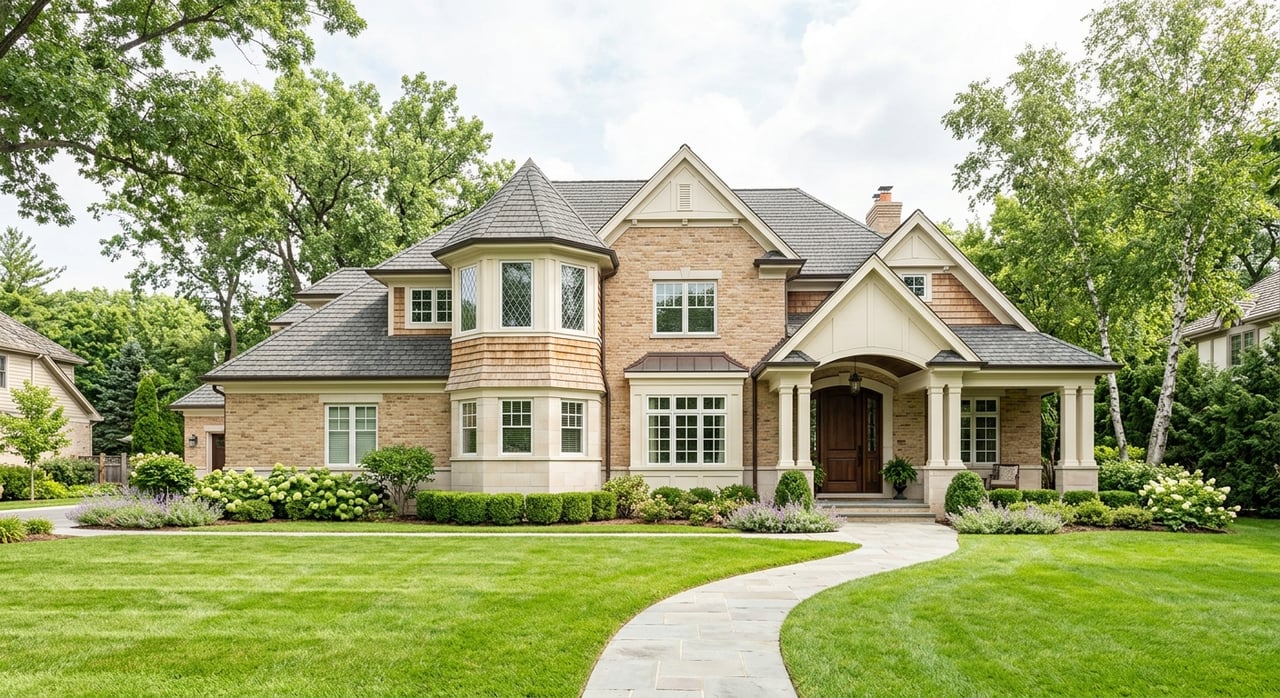
That variety can work well for buyers with different priorities. You may be looking for a classic home in a mature setting, a more updated property, or a newer residence with more modern features. Clarendon Hills offers a broader mix than some buyers assume at first glance.
Costs and Market Expectations
Clarendon Hills is not an entry-level market, and it helps to go in with realistic expectations. According to U.S. Census QuickFacts, the owner-occupied rate is 84.2 percent, the median owner-occupied home value is $605,800, and median monthly owner costs are $3,379 with a mortgage.
For detached single-family homes, recent sales data points to a higher practical buying threshold. The 2025 detached single-family report shows a median sale price of $775,000 in Clarendon Hills. That places the village firmly in the upper-tier suburban category, though still below some nearby luxury markets.
A smaller market also means inventory can be tighter. That same report shows 91 detached single-family sales in Clarendon Hills in 2025, compared with 206 in Hinsdale and 167 in Western Springs. For you as a buyer, that usually means fewer options at any given time and a need to act decisively when the right home appears.
How Clarendon Hills Compares Nearby
If you are choosing between western suburbs, price positioning matters. Based on the same 2025 market report, Clarendon Hills had a detached single-family median sale price of $775,000, compared with $913,000 in Western Springs and $1,409,250 in Hinsdale.
That makes Clarendon Hills the more compact and somewhat more accessible option of the three on typical detached-home pricing. It can be a strong middle ground if you want a well-known west suburban location and commuter convenience, but you are also watching relative value compared with neighboring luxury markets.
Commute time also stays competitive. Census data shows a mean commute time of 28.9 minutes in Clarendon Hills, versus 31.0 minutes in Western Springs and 31.6 minutes in Hinsdale. While every buyer’s routine is different, that is another reason Clarendon Hills often enters the conversation for Chicago-area commuters.
Who Clarendon Hills May Fit Best
Clarendon Hills can be a strong match if you want a walkable train-town setting with established homes and local amenities. Based on the research, the village often lines up well for commuters, households looking for access to parks and activities, and downsizers who still want an active community feel.
It may especially suit you if your wish list includes:
- A suburban location with Metra access
- A pedestrian-friendly downtown
- Mostly single-family housing
- Established streetscapes and mature neighborhood settings
- Community events throughout the year
- Recreation and programming through the park district
It can also be a smart option if you are comparing nearby villages and want to stay below Hinsdale’s or Western Springs’ typical detached-home pricing while remaining in a highly regarded west suburban pocket.
Schools and Community Context
For many buyers, school access is part of the decision-making process. Community Consolidated School District 181 reports that Clarendon Hills Middle School and Walker Elementary were named 2025 National Blue Ribbon Schools. The village also notes that Prospect Elementary, Walker Elementary, and Clarendon Hills Middle School are located in town, and that many students attend Hinsdale Central High School.
The population profile also suggests a community with a mix of life stages. Census data shows that 29.1 percent of residents are under age 18 and 13.6 percent are age 65 and older. That balance may appeal if you are looking for a village with both long-term residents and newer households.
Tradeoffs to Keep in Mind
No suburb is the perfect fit for everyone, and Clarendon Hills is no exception. Its smaller size and lower turnover can limit selection, especially if you have a very specific checklist around lot size, architecture, or newer construction.
Price is another practical factor. Even though Clarendon Hills can be more accessible than some neighboring luxury suburbs, it still commands substantial home values and monthly ownership costs. If you are considering a move here, it helps to be clear on both your purchase range and how flexible you can be on timing.
Is Clarendon Hills a Good Fit?
For many buyers, the answer is yes, especially if you value a polished suburban setting with commuter access, a lively downtown, established housing, and strong local amenities. Clarendon Hills offers a distinctive blend of small-scale charm and upper-tier west suburban real estate.
The best way to know if it fits your next move is to compare your priorities against the village’s realities: limited inventory, meaningful pricing, and a lifestyle centered on walkability, local events, parks, and train convenience. If that mix sounds right for you, Clarendon Hills is absolutely worth serious consideration.
If you are weighing Clarendon Hills against nearby suburbs or want guidance on available homes, off-market opportunities, or timing your move, McCleary Group can help you make a confident, well-informed decision.
FAQs
Is Clarendon Hills a good suburb for Chicago commuters?
- Yes. The village says the Metra station offers quick access to downtown Chicago, and more than 900 riders board the Clarendon Hills Metra Station daily.
What types of homes are most common in Clarendon Hills?
- Single-family detached homes are the most common. The CMAP snapshot says 73.3 percent of the housing stock is single-family detached.
How expensive are homes in Clarendon Hills?
- Census QuickFacts lists a median owner-occupied home value of $605,800, and the 2025 detached single-family report shows a median sale price of $775,000 for detached homes.
How does Clarendon Hills compare with Hinsdale and Western Springs?
- Clarendon Hills is the more compact and somewhat more accessible option on detached-home pricing, with a 2025 median sale price below both Western Springs and Hinsdale.
Does Clarendon Hills have parks and local events?
- Yes. The Park District has eight park sites totaling about 45 acres, and the village highlights events such as Farmers Market, Daisy Days, Oktoberfest, Holiday Walk, and the Tree Lighting Ceremony.
Is Clarendon Hills a smaller housing market?
- Yes. The 2025 detached single-family report shows 91 sales in Clarendon Hills, which suggests fewer listings and less variety than some nearby villages.